Overlooked No More: Colorado Neighborhoods That Turned the Corner
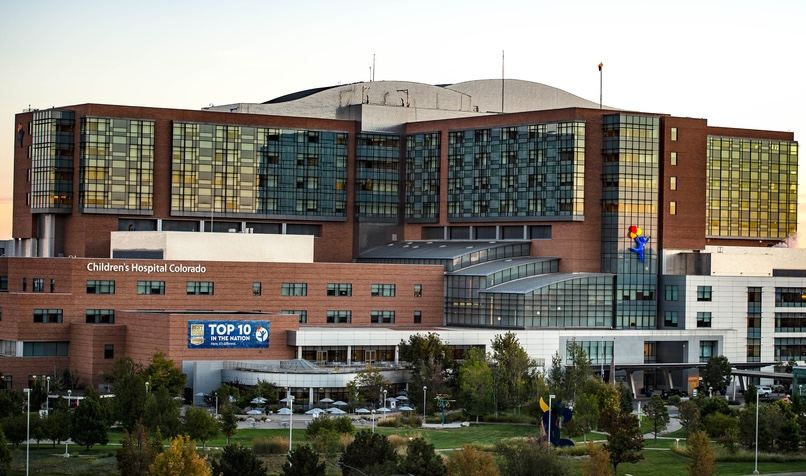
North Aurora took off after Children's Hospital and the Anschutz campus arrived. Here's how Colorado neighborhoods turn the corner, the signs to watch for, and the one we're watching next.
The best buys often sit in neighborhoods most people drive past. The New York Times recently profiled Atlantic City, where buyers who looked past the casino-town reputation saw their homes double in value. Colorado has its own version of that story, and a few chapters are still being written.
North Aurora: From Closed Army Base to Medical Powerhouse
Twenty-five years ago, the neighborhoods north and south of East Colfax around Peoria were among the most overlooked in the metro. The anchor of the area, Fitzsimons Army Medical Center, closed in 1999 after more than 80 years.
Then the investment started stacking up:
- 2006: The old base was renamed the CU Anschutz Medical Campus.
- 2007: Children's Hospital Colorado moved its flagship from downtown Denver to the campus, and University of Colorado Hospital opened its new facility there the same year.
- 2012: Children's opened a $230 million, 10-story tower to keep up with demand.
- Later: The Rocky Mountain Regional VA Medical Center opened next door, and the I-225 light rail added stations nearby.
Tens of thousands of doctors, nurses, researchers and staff now work on one square mile, and many want to live close by. Neighborhood groups even ran a "Live Where You Work" campaign to draw campus employees into nearby Hoffman Heights.
What it meant for home values: Homes in the 80010 ZIP code were trading for roughly $105,000 to $165,000 in 2010. The median was $295,000 by January 2020 and $469,000 by April 2022. Recent medians sit in the $400,000s. Citywide, Aurora home values rose 71% from 2010 to 2017 alone.
Not every piece hit right away. The science and technology park on the north end of the campus was slow to fill. Big projects take years, and patient buyers did best.
Central Park: When the Airport Left Town
When Stapleton International Airport closed in 1995, it left 4,700 acres of runways in northeast Denver. Plenty of people doubted anyone would want to live next to an old airfield.
It became one of the largest urban redevelopments in the country. Today the neighborhood, renamed Central Park in 2020, has dozens of parks and schools and an A Line rail station with direct trains to Union Station and DIA.
By 2021, homes there were selling for $255 per square foot, compared with $214 across the metro. Building is now nearly finished, so most of what comes up for sale is resale.
The One to Watch: Globeville and Elyria-Swansea
If North Aurora was the story of the 2000s, Globeville and Elyria-Swansea in north Denver may be the story of the next decade. For generations these neighborhoods were split by I-25 and I-70 and surrounded by industry.
Here's what has changed:
- The National Western Center, a 250-acre redevelopment of the Stock Show grounds, is turning a once-a-year event site into a year-round campus.
- CSU Spur, Colorado State University's free public campus focused on food, water and health, is fully open.
- New riverfront open space along the South Platte, with a new bridge at 51st Avenue connecting to the regional trail system.
- A light rail station sits next to the National Western Center.
Home values are still well below the Denver average. Zillow puts typical values around $365,000 in Globeville and $355,000 in Elyria-Swansea.
To be fair, this one isn't a sure thing. Some later phases of the National Western plan are still unfunded, values have dipped over the past year along with the rest of Denver, and longtime residents worry about being priced out. That's what "overlooked" looks like. The upside and the risk are both real.
How to Spot the Next Overlooked Neighborhood
The pattern repeats. Before prices move, the signs usually show up in roughly this order:
- A big anchor commits. A hospital, university campus, major employer or stadium signs on, with money behind it, not just a plan.
- Transit and roads follow. A new light rail station, a highway fix or a new bridge makes the area easier to reach.
- Public money gets spent. Look for funded parks, trails, streetscapes and flood control, not just proposals.
- Small investors show up. Flips, additions and renovation permits start appearing on older blocks.
- The coffee shop test. New restaurants and local businesses open, and homes start selling faster.
By step 5, much of the easy gain is often gone. Buyers who bought at steps 1 to 3 did the best in North Aurora.
One caution: nobody can promise appreciation. Buy a home you would be happy living in even if the neighborhood takes longer to change than you hoped.
Financing a Home in a Neighborhood on the Rise
Homes in up-and-coming areas are often older and need work. The right loan can make that an advantage:
- Renovation loans (FHA 203(k) and conventional options) roll the purchase and repairs into one mortgage, so you can buy the fixer and finance the fix.
- FHA loans allow as little as 3.5% down. The 2026 FHA limit is $862,500 across the Denver metro, including Denver and Arapahoe counties. See our FHA loan limits guide.
- Duplexes and fourplexes can be bought with FHA if you live in one unit, and rent from the others can help you qualify.
- Down payment assistance programs can help cover your upfront costs. Learn more.
- Self-employed? Bank statement and P&L loans use your real income, not just your tax returns. See self-employed loans.
Thinking about an overlooked neighborhood? As a brokerage, we compare 100+ lenders to find the loan that fits the house and the plan. Text or call us at (303) 931-6776, or apply online.
Get Pre-ApprovedText UsCall (303) 931-6776
Sources: CU Anschutz Medical Campus, Children's Hospital Colorado, City of Aurora Housing Study, Westword, Sentinel Colorado, ColoradoBiz, Urban Land Institute, The Denver Post, Colorado State University, Denverite and Zillow. Past performance of a neighborhood does not guarantee future home values. Loan programs are subject to eligibility and approval.